Top 10 Careers in Skilled Trades
Skilled trades are career options that don’t require a four-year college degree. Many opportunities exist to learn a skilled trade after leaving military life, and demand for military members and military-adjacent applicants (spouses and college-age dependent children) to fill these skilled trade jobs exists in America and overseas.
Top 10 Careers in Skilled Trades
Many options exist to pay for school and technical training. The Post-9/11 GI Bill, the Montgomery GI Bill, the SpouseWorks scholarship, and the Veteran Readiness and Employment program may help cover tuition, tool kits, testing fees, and housing allowances.
Not all skilled trades train, hire, and promote in the same way. Pay, job conditions, and opportunities to grow will vary in important ways, and the trade you choose should match your interests and abilities. Not all skilled trade opportunities are created equal, and some offer more opportunities for veterans. Here’s our list of the top 10 skilled trade opportunities veterans and military spouses should consider when transitioning out of military life.
10. Heavy Equipment and Construction Operators
Heavy equipment operators run hydraulic excavators, bulldozers, backhoes, wheel loaders, motor graders, and cranes. Work includes site clearance, earthmoving, ditch trenching, road grading, material hoisting, and backfilling utility ditches. Operators inspect machinery, maintain hydraulic fluid levels, and follow GPS guidance to achieve proper soil compaction.
School options include accredited community college certificate programs, private operator schools, and four-year operating engineers apprenticeships. Coursework involves heavy machine systems, soil mechanics, safety signaling, earthmoving, and maintenance. Crane operators must obtain national certification through organizations such as the National Commission for the Certification of Crane Operators (NCCCO), requiring passing written exams and hands-on skills tests.
9. Welders, Cutters, Solderers, and Brazers
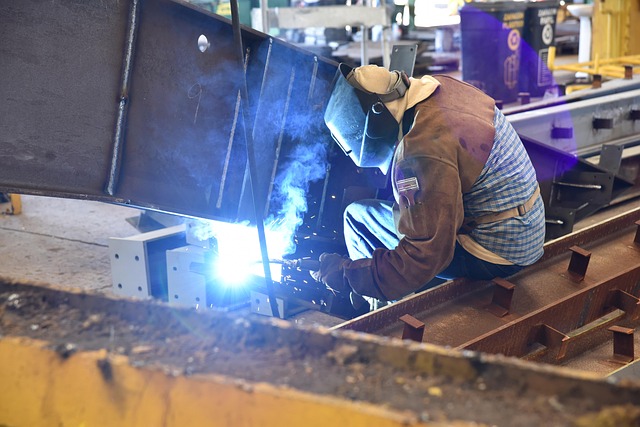
Welders use heat, flame, or electric arcs to fuse metal components in construction, shipbuilding, pipeline installation, aerospace manufacturing, and automotive repair.
Technicians work with shielded metal arc welding (SMAW/stick), gas metal arc welding (GMAW/MIG), gas tungsten arc welding (GTAW/TIG), and flux-cored arc welding (FCAW). This job requires reading structural blueprints, preparing metal joints, grinding welds, and checking for cracks, porosity, or slag inclusions.
Welding students can enroll in dedicated vocational trade programs or complete an associate-level welding technology degree. Classes cover metallurgy, joint geometry, safety protocols, and welding plates and pipes (such as the 3G plate or 6G pipe tests). The American Welding Society (AWS) oversees Certified Welder evaluations to qualify professionals for structural steel, boiler, pressure vessel, or pipeline work.
Prospective students can explore a welding career to evaluate specialized roles like pipeline welding, structural ironworking, and naval fabrication.
- Hobart Institute of Welding Technology (Troy, OH)
- Arkansas Welding Academy (Jacksonville, AR)
- Tulsa Welding School (Tulsa, OK)
- Tulsa Welding School (Jacksonville, FL)
8. Electrical Power-Line Installers and Repairers
Line workers construct, inspect, and repair high-voltage overhead and underground electrical transmission and distribution networks. Duties include climbing utility poles, operating bucket trucks, stringing cable, installing pole-mounted transformers, and setting underground conduit pads. Line mechanics must isolate short circuits and restore utility grids.
Training begins at a college or an apprenticeship program run by regional utilities or the Joint Apprenticeship and Training Committee (JATC). Students may need a commercial driver’s license (CDL Class A), in addition to learning pole climbing, rigging safety, high-voltage theory, and OSHA power distribution rules. Apprentices complete extensive supervised field work before advancing to journeyman line status.
7. Wind Turbine Service Technicians
Wind technicians operate, inspect, service, and troubleshoot mechanical systems on utility-scale wind turbines. Technicians climb interior ladders reaching heights of 200 to 300 feet. Typical tasks include inspecting composite fiberglass blades, testing hydraulic pitch controls, servicing gearboxes, lubricating bearings, and testing high-voltage power-generation hardware.
Students attend one- to two-year certificate or Associate of Applied Science programs in wind energy technology. Coursework may include mechanical drive maintenance, electronics, hydraulic troubleshooting, fiber optics, and advanced high-angle rope rescue training.
6. Solar Photovoltaic Installers
Solar photovoltaic (PV) installers set up, wire, and maintain rooftop and ground-mounted solar energy arrays. Technicians inspect support structures, attach mounting brackets, position solar modules, run electrical wiring through conduit, and connect arrays to inverter equipment.
Vocational training focuses on basic electrical wiring, roof safety, OSHA fall protection, and National Electrical Code Section 690 rules. Installers routinely earn credentials through the North American Board of Certified Energy Practitioners (NABCEP), beginning with the NABCEP PV Associate credential.
5. Elevator and Escalator Installers and Repairers
Elevator constructors install, test, modernize, and service traction and hydraulic elevators, escalators, moving walkways, dumbwaiters, and related hoists. Mechanics assemble car frames, erect guide rails in vertical hoistways, run steel hoist ropes, wire microprocessor control rooms, and configure cab door interlocks.
This career generally requires a specialized four-year apprenticeship, such as the National Elevator Industry Educational Program (NEIEP), or completing electrical and mechanical vocational certificates. Training covers electrical theory, hydraulic circuitry, blueprint interpretation, and American Society of Mechanical Engineers (ASME) A17 safety codes. Most jurisdictions require a state mechanic license or the Certified Elevator Technician (CET) credential.
4. Plumbers, Pipefitters, and Steamfitters
Plumbers design, install, and repair domestic drinking water supply lines, drainage, waste, and vent (DWV) piping, natural gas systems, and plumbing fixtures. Pipefitters and steamfitters work on high-pressure steam systems, industrial process pipes, chemical distribution lines, and power-generation facilities.
Apprenticeships emphasize local and International Plumbing Code regulations, hydraulic flow calculations, backflow prevention, and plan reading. Specialized pipefitters often earn high-pressure ASME welding certifications to work on boiler and turbine loops. Candidates may need up to 5 years of documented apprentice field hours before qualifying for a journeyman plumber or pipefitter license.
3. Heating, Air Conditioning, and Refrigeration (HVAC/R) Technicians
HVAC/R technicians install, inspect, service, and balance heating, ventilation, air conditioning, and commercial refrigeration systems. Technicians run electrical lines to compressors, fabricate ductwork, solder copper lines, braze tubing, vacuum refrigerant circuits, and charge systems. Commercial service technicians oversee chilled water systems, rooftop air handlers, variable refrigerant flow (VRF) equipment, and cooling towers for data centers and healthcare operations.
Technicians servicing stationary refrigeration and air conditioning systems must earn Section 608 Environmental Protection Agency (EPA) certification under the Clean Air Act to handle regulated refrigerants. Community colleges and trade schools teach heat transfer physics, airflow dynamics, compressor mechanics, and burner operations.
Veterans can review HVAC training and certification options and plan their transition through a dedicated HVAC career roadmap.
2. Industrial Machinery Mechanics and Millwrights
Industrial machinery mechanics maintain, troubleshoot, and overhaul factory machinery, heavy production equipment, packaging lines, and conveyor systems. Millwrights specialize in dismantling, moving, assembling, and leveling heavy machinery using hoisting equipment, precision levels, and lasers. This job requires expertise in mechanical drives, pneumatic actuators, hydraulic pumps, gearboxes, and Programmable Logic Controllers (PLCs).
Training for this field requires technical diplomas or Associate of Applied Science degrees in industrial maintenance technology. Coursework covers mechanical blueprints, welding fabrication, electrical motor controls, predictive maintenance, and vibration analysis.
1. Electricians
Electricians assemble, install, test, and maintain electrical wiring, equipment, appliances, apparatus, and fixtures. Daily tasks involve reading blueprints, bending electrical metallic tubing (EMT), running conduit across commercial framing, and wiring main distribution panels. The trade divides into residential, commercial, and industrial specializations.
Residential workers wire homes, install breakers, and set up low-voltage networks. Commercial and industrial electricians work on high-voltage switchgear, three-phase power, backup generators, motor control centers, and automated manufacturing systems.
Training begins in vocational programs or registered union (IBEW/NECA) and non-union (IEC/ABC) apprenticeships. Schooling includes electrical theory, Ohm’s law, circuit design, grounding, and the National Electrical Code (NEC). Apprentices complete on-the-job training alongside classroom study before taking a state journeyman licensing examination.
Transitioning service members can review electrician certification guides to translate military engineering or electronics maintenance experience into college credit.

