Welding Training and Certification
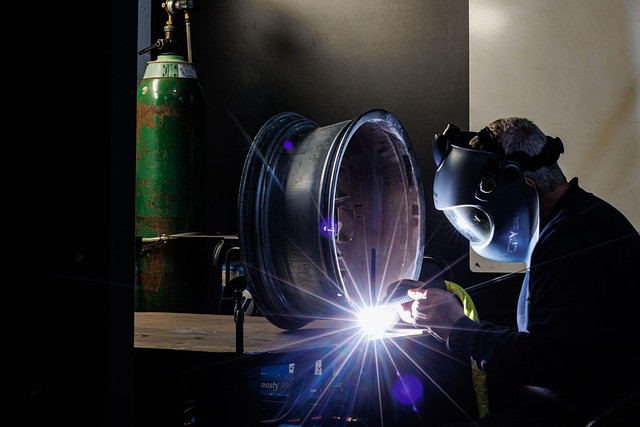
Welding and metal fabrication are needed in practically every sector of mechanical construction. Field crews handle everything from light structural frames to thick-wall pressure pipe under extreme pressure.
Welding Training and Certification
Qualified welders must interpret complex welding procedure specifications, calculate material shrinkage, and manage joint preparation.
They must learn a variety of technical processes: Shielded Metal Arc Welding (SMAW), Gas Metal Arc Welding (GMAW), Flux-Cored Arc Welding (FCAW), and Gas Tungsten Arc Welding (GTAW). The craft demands steady hand skills, strong blueprint literacy, and practical knowledge of metal properties.
Welding Training Institutions
Welding education includes vocational academies, community colleges, and four-year technical institutions. Programs often align coursework with American Welding Society (AWS) educational standards and teach visual inspection methods, safety guidelines, and code compliance. Schools offering recognized welding technology programs include:
The University of Montana (Missoula, Montana) offers Associate of Applied Science (A.A.S.) degree pathways and technical certificates in welding technology, providing comprehensive shop practice in multi-position plate and pipe welding.
SUNY College of Technology (Alfred, New York) provides hands-on occupational studies degrees and welding technology programs structured around structural steel, plate, and industrial fabrication codes.
Great Basin College (Elko, Nevada) features intensive trade training and associate degree options designed to prepare students for structural and pipe certification exams across regional mining and infrastructure industries.
Hobart Institute of Welding Technology (Troy, Ohio) runs focused structural and pipe welding programs that train students in hands-on torch techniques, filler metal properties, and coupon testing.
>>Strategic job hunting — Get started now!
Welding Career Options
- Entry-Level Structural Welders fit, tack, and weld carbon steel plate, beams, and columns on commercial construction projects under AWS D1.1 structural standards.
- Industrial Pipe Welders work on high-pressure steam, oil, chemical, and gas lines under ASME Section IX or API 1104 standards.
- Robotic Welding Technicians set fixtures, program robotic weld paths, and monitor arc systems in production plants.
- Quality Control Inspectors conduct visual examinations, measure weld profiles with fillet gauges, run non-destructive evaluations, and audit documentation under certified standards.
- Maintenance and Repair Welders troubleshoot damaged machinery, build up worn components with hardfacing alloys, and cut out cracked joints across industrial processing plants.
- Rig Welders / Mobile Rig Operators operate self-contained field welding rigs, providing custom on-site repair, cross-country pipeline tie-ins, or agricultural fabrication.
- Welding Shop Owners / Fabrication Contractors operate an independent metal fabrication facility, manage inventory, and handle commercial structural subcontracts.
Get Certified in Welding
Welder Performance Qualification Test
Hands-on testing requires welding a joint in a specified position (flat, horizontal, vertical, or overhead) followed by destructive bend testing or radiographic evaluation. Welders with existing skills can complete testing in 3 days or less, with official credential documentation processed and issued within 4 weeks.
Vocational Certificates and Diplomas
Standalone vocational programs bypass academic requirements to focus strictly on shop time, machine setup, and joint testing. These run 6 to 12 months.
Associate of Applied Science Degrees in Welding Technology
Community colleges pair intense welding shop hours with blueprint reading, mathematics, metallurgy, and general academics. These require roughly 18 to 24 months to complete.
>>Strategic job hunting — Get started now!
Registered Apprenticeships
Joint Apprenticeship and Training Committees (JATC) combine on-the-job training with classroom instruction. Structural ironworking programs require up to 4 years and up to 8,000 on-the-job hours, while pipe trades through the United Association (UA) require 5 years and roughly 8,500 to 10,000 field hours.
Military Transition and Department of Defense Programs
The United Association Veterans in Piping (VIP) program provides active-duty service members with a full-time welding course at participating military bases before separation. The training charges zero tuition, leaves Post-9/11 GI Bill entitlement untouched, and guarantees direct placement into a union apprenticeship with living wages upon discharge.
Veterans entering civilian community colleges, technical colleges, or non-union trade schools can use the Post-9/11 GI Bill or the Veteran Readiness and Employment (VR&E) program to fund tuition and earn a monthly housing allowance. These benefits can also pay standard monthly housing stipends during registered on-the-job apprenticeships.
For Military Spouses
Military spouses have career support through the Department of Defense SpouseWorks portal on Military OneSource, designed to reduce employment issues caused by frequent base moves.
Eligible spouses receive financial assistance to cover tuition, books, and fees for school, including earning technical credentials. These may include qualifying trade school programs and welding certifications.
This program was known as MyCAA for years, but in 2026 the Department of Defense rebranded it as the SpouseWorks program. It still offers the same options but under a new name. DoD SpouseWorks integrates employer partner networks and corporate fellowship tracks, connecting military spouses with firms hiring nationwide.
>>Strategic job hunting — Get started now!

